

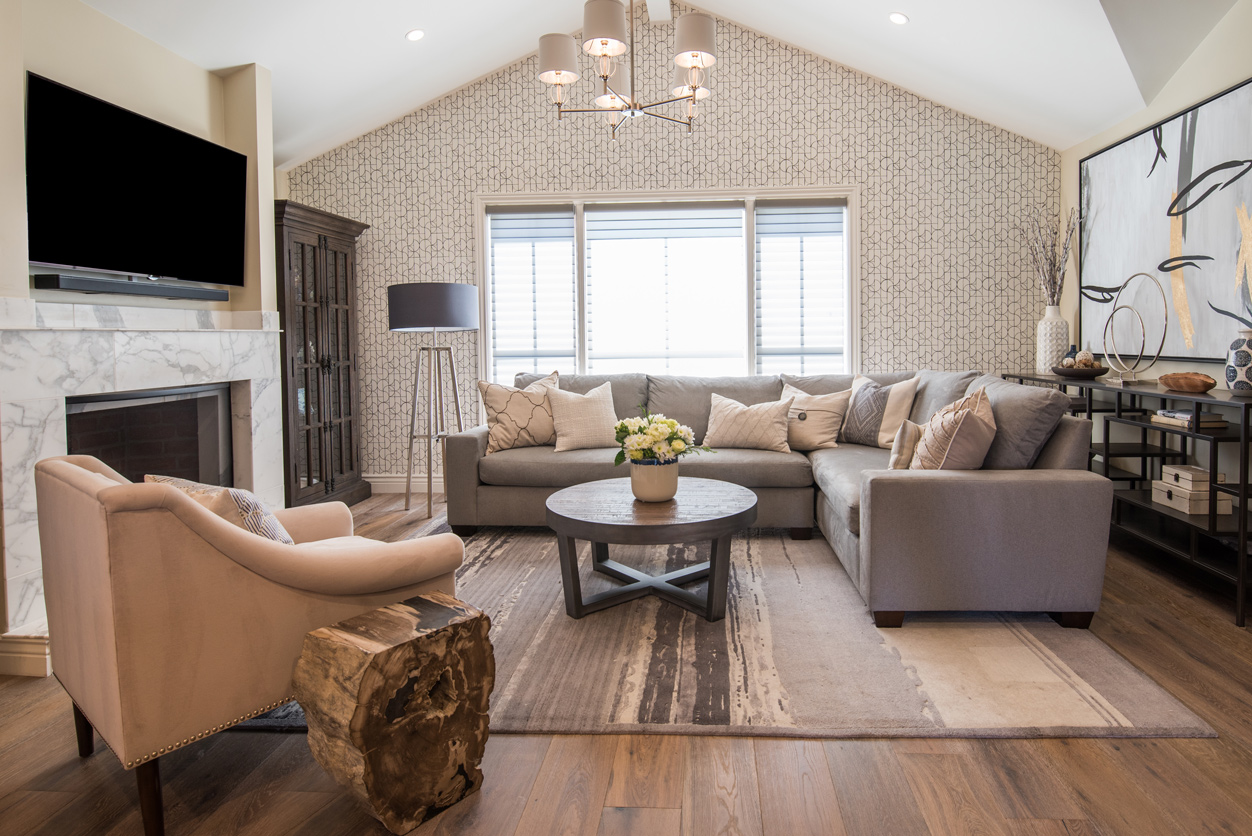
Eclectic interior design combines furniture, materials and influences from different periods or styles within one room or home. It works when those differences are connected by proportion, color, material or function. Start with the pieces worth keeping, establish a few common threads, then add contrast where the room can carry it.
Eclectic interior design suits homes that have accumulated more than one influence. There may be a contemporary sofa beside an inherited table, art collected while traveling, mid-century chairs and a rug that belongs to another tradition entirely.
The challenge is rarely finding enough interesting things. It is deciding which ones deserve to stay together.
You do not need to arrive with a name for every style in the room. Start with what matters to the household, what functions well and what already has enough quality or meaning to earn a place in the new design.
Eclectic design combines elements that come from different stylistic traditions, periods or places and gives them a relationship within one interior.
The idea itself is older than the current decorating label. The Metropolitan Museum of Art describes eighteenth-century English interiors that combined Neo-Palladian architecture with French Rococo ornament, and nineteenth-century design drawn repeatedly from earlier historical styles. Mixing design vocabularies has a long history.
A contemporary eclectic room might bring together a clean-lined sofa, an antique chest, modern art and a traditional rug. Their dates do not need to match. Their scale, color and placement still need to make sense together.
That distinction matters because eclecticism is not permission to keep adding.
A room needs a few relationships that repeat.
They can come from color, wood tone, proportion, shape or material. A contemporary chair and an antique table may share nothing historically, but both might have dark timber, slim proportions or curved forms.
A useful review looks like this:
| What varies | What can create connection |
| Furniture period | Similar scale or proportion |
| Pattern | A shared color |
| Wood species | Related undertones |
| Furniture shape | Repeated curves or straight lines |
| Metals | A limited family of finishes |
| Art and objects | Similar framing, placement or visual weight |
The goal is not to create a matching set. Enough repetition allows the differences to feel deliberate.
Research into preferences for architectural interiors offers a useful parallel. A 2021 study found that coherence, defined as how easily a viewer can organize and understand a scene, influenced preference across all of the groups studied. The study does not prescribe how to furnish an eclectic home, but it supports the importance of making visual complexity understandable.
Start with the objects that have the strongest reason to remain.
That might be an inherited dining table, a piece of art bought years ago, a well-made sofa, a vintage cabinet or a rug that already carries several colors. These pieces give the design something specific to respond to.
Their value does not have to be financial. A family piece with awkward proportions may still deserve accommodation because it matters to the household. The design then needs to account for the space it occupies and what can sit comfortably beside it.
This is where eclectic home design becomes more disciplined than simply shopping across several styles. Existing pieces are measured and assessed first. New furniture fills actual gaps instead of creating a second collection beside the first.
A room also benefits from knowing which object is allowed to be unusual. If an ornate antique cabinet already commands attention, the wall, art and furniture around it may need less complexity.
Age alone does not determine whether two pieces work together.
Look first at proportion. A delicate antique side table can disappear beside a deep sectional. A heavy carved chest can overpower lightweight contemporary furniture even when the colors are compatible.
Material can help bridge the gap. A newer chair upholstered in a textile that relates to an older rug creates a link without imitating the rug’s period.
The same applies to shape. A contemporary round dining table can sit naturally near older curved-back chairs because the forms speak to one another.
When mixing interior styles, it is usually more useful to compare the actual pieces than the labels attached to them. “Mid-century” and “traditional” tell less about compatibility than height, depth, finish and silhouette.
A room built this way can continue changing over time. New additions have criteria to meet without needing to come from the same decade as everything already there.
Eclectic interiors can carry substantial color and pattern, but both need hierarchy.
If the rug has a large pattern, upholstery can pick up one of its quieter colors. If wallpaper carries the strongest motif, nearby furniture may use texture or solid color instead of another equally active print.
The pattern article in this series follows the same principle: variation in scale and visual weight helps several motifs remain legible.
Color can provide a larger connection across different styles. A rust-colored antique textile, contemporary artwork and a modern chair can sit comfortably together if the palette repeats with enough restraint.
Kanika Design’s Eclectic Living + Dining project in San Carlos uses this approach. The connected living and dining rooms share a largely monochromatic palette, while wallpaper, wood elements, custom furniture and handmade silk rugs add variation. The style comes from the combination of materials and pieces; the controlled palette keeps the rooms connected.
The useful eclectic decor ideas are the ones that add something the room does not already have.
An old object can introduce patina into a room dominated by new furniture. Contemporary art can keep traditional architecture from becoming overly formal. A handmade textile may add pattern to a room whose larger furniture is plain.
Before adding another object, check what role it would play:
An interesting object still needs space around it.
This is especially important for shelves, consoles and coffee tables. Eclectic rooms often contain collections because the household has gathered things over time. Grouping related objects usually gives them more clarity than distributing individual pieces across every available surface.
Global influence can be part of an eclectic home without turning rooms into collections of design clichés.
Kanika Bakshi Khurana’s own design perspective has been shaped partly by travel. Her current biography says she has visited more than 64 countries and identifies mixing different interior styles as part of her work.
For the homeowner, provenance is more useful than a vague label such as “global.” A handwoven rug, carved object, textile or piece of furniture has a material, maker, place and context. Those specifics make the object more interesting and help prevent very different traditions from being flattened into one decorative category.
There is historical precedent for borrowing across traditions, along with a long-standing warning about copying appearances without understanding them. The Metropolitan Museum of Art’s discussion of Owen Jones’s The Grammar of Ornament notes that nineteenth-century designers drew heavily from historical sources. Jones argued that designers should learn principles from earlier work instead of simply reproducing its results.
That is still useful advice. Inspiration is stronger when the object has a reason to be in the home beyond its ability to signal a place or style.
Clutter usually appears when too many things ask for attention at the same strength.
The problem can come from pattern, color, furniture count, open storage or simply the number of small objects in view. An eclectic room does not require all of those sources of detail at once.
Before adding storage or buying new furniture, identify what is creating the noise.
A room with several good pieces may need one removed. A shelf of unrelated objects may need editing or regrouping. Two chairs might work individually but compete because each has a strong shape, fabric and color.
The smallest intervention should come first.
That principle also protects the things worth seeing. A painting becomes easier to appreciate when the wall around it is quieter. A sculptural chair gains presence when the side table beside it does not compete for the same attention.
Yes. Eclecticism describes the sources being combined, not how visually loud the finished room has to be.
A quiet modern eclectic interior design might use furniture from several periods within a narrow palette. Differences then show up in silhouette, material and age rather than strong color.
Kanika Design’s Mid-Century Eclectic Living Space offers a related example. The project mixed old and new furniture while keeping the overall furnishing plan relatively simple and using darker wall colors to connect the pieces.
The lesson is useful beyond that project: variety does not require maximum quantity.
A calm room can still contain history, travel, inherited furniture and contemporary pieces. It needs an editor.
Whole-home consistency can come from a few recurring decisions.
Flooring, wall colors, door and trim finishes, metal families or repeated wood tones can create continuity while individual rooms develop their own character.
Sightlines matter as well. A traditional dining room visible from a contemporary living room does not need to duplicate its furnishings, but some relationship between color or material helps the transition feel considered.
The connection can be subtle. A walnut detail in one room may reappear in another. A blue from a patterned rug may return as art or upholstery farther through the house.
This gives each room freedom without making the home feel assembled one room at a time.
Many eclectic rooms do not need redesign. They need sorting.
Removing one redundant table, moving art, reupholstering a good chair or grouping a collection differently can reveal relationships that were already present.
A professional organizer may be useful when the main issue is the amount of belongings. A furniture retailer or upholsterer may be enough when one piece needs replacing or recovering.
Interior design becomes more relevant when several decisions are connected: the furniture plan is changing, existing pieces need to be incorporated, new upholstery and rugs must coordinate, custom storage is involved, or several rooms need to relate to one another.
Also Read – Art Deco Interior Design: Why It Was Never Just a Trend
Kanika Design starts with the people in the home and the pieces that already matter to them. That fits the studio’s broader philosophy: the design should respond to the client’s life instead of imposing a fixed house style.
For furnishing work, the studio can measure existing furniture, determine what deserves to remain and develop the new pieces around it. Material samples and realistic 3D presentations allow different furniture, colors and finishes to be reviewed as part of one design before procurement begins. The firm’s current full-service page describes a process that runs from the initial requirements through design, procurement and installation.
For homeowners considering Bay Area interior design, that level of involvement makes sense when the challenge extends beyond adding a few decorative objects and into the relationship between rooms, furnishings and permanent finishes.
A household that already has a sound room and wants help choosing one lamp or replacing a side table does not need a full-service design process.
Eclectic interior design combines furnishings, materials or influences from different periods and styles within one room or home.
A successful eclectic interior still has structure. Color, proportion, material, repetition and placement create relationships between pieces that were not originally designed as a set.
No. The two can overlap, but they describe different things.
Eclectic refers to combining different stylistic sources. Maximalism usually refers to abundance and visual density. An eclectic home can be restrained, while a maximalist room can draw heavily from one particular style.
There is no useful fixed number.
The room needs enough connection between the pieces for the whole composition to remain understandable. A few strongly different pieces can work well when their scale, colors or materials relate to one another.
Start by identifying repeated elements. A common wood tone, recurring color, similar furniture proportions or related shapes can connect pieces from different periods.
Then edit objects that do not support the room or have a clear use.
Yes. Compare the pieces by scale, material, shape and function.
An antique piece often works well in a contemporary room when it has enough space around it and another element in the room relates to its color, finish or form.
Yes. Individual rooms can combine different influences while the home retains continuity through flooring, wall colors, materials, trim or other repeated elements.
Connected sightlines deserve particular attention because several rooms may be visible at the same time.
RECENT COMMENTS