

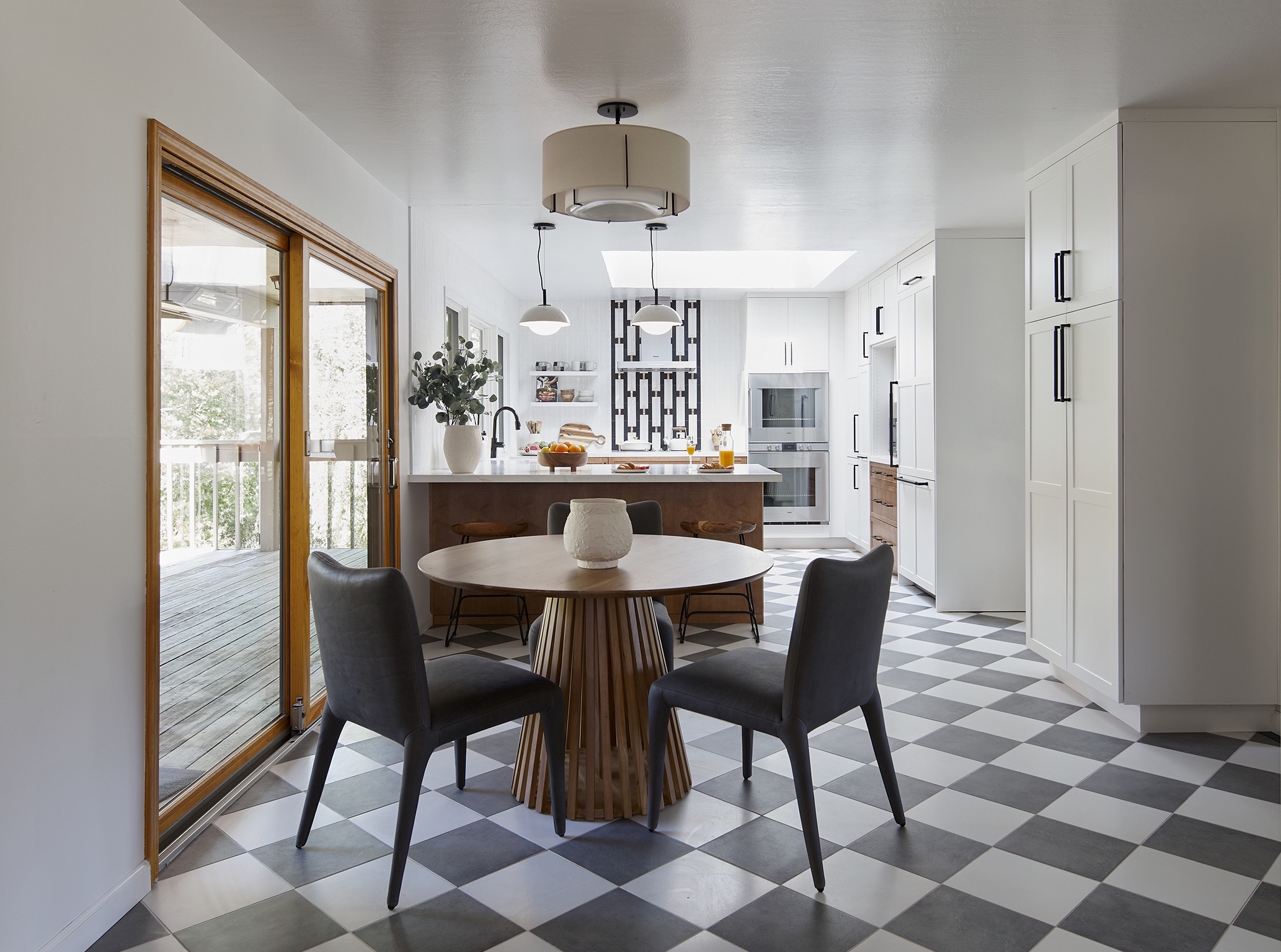
Mediterranean interior design suits California best when it begins with climate, architecture and material. Shaded outdoor rooms, tactile plaster, stone, timber and tile can translate well. Historic motifs need more care because they work most convincingly when the house already gives them an architectural reason to be there.
Mediterranean interior design is a broad description, not one historical interior style. Spain, Italy, Greece and other parts of the Mediterranean developed distinct building traditions shaped by local materials, climate and culture.
California has its own relationship with several of those influences, especially through Spanish, Mexican, Mission Revival and Spanish Colonial Revival architecture. That makes the connection useful, but it does not turn every California house into a Mediterranean one.
You do not need to begin with a checklist of terracotta, arches and blue-and-white accessories. Start with the house that already exists.
Mediterranean interiors are commonly associated with textured walls, natural stone, tile, timber, outdoor living and colors drawn from earth and vegetation.
Those ingredients appear differently from place to place. A Greek island house, an Italian villa and a Spanish courtyard home should not be treated as interchangeable references.
For a Mediterranean-style home interior, the useful question is which qualities suit the architecture and setting of the actual property.
California has a long architectural history of adapting Mediterranean and Spanish influences.
The National Park Service identifies Mission Revival and Mediterranean Revival architecture in Northern California and traces early California settlements to Spanish and Mexican building traditions. Later Spanish Colonial Revival designers drew from a wider range of Mediterranean precedents.
That history gives the style a legitimate California context. It also explains why the strongest versions tend to begin with architecture, climate and materials instead of decorative symbols.
Some principles move easily into contemporary California homes because they still serve the way the house is used.
| Mediterranean principle | California application |
| Indoor-outdoor connection | Treat terraces, patios and garden-facing rooms as part of everyday living |
| Shaded transitional space | Make useful rooms of existing porches, courtyards and covered patios |
| Textured wall surfaces | Use subtle plaster or limewash-like finishes where they suit the architecture |
| Natural stone and tile | Choose them for their material character as well as their appearance |
| Timber | Use visible grain and warmth to balance harder surfaces |
| Restrained ornament | Let one distinctive tile, light fixture or architectural feature carry attention |
Research into Mediterranean courtyards and vernacular ventilation shows that many admired architectural features developed partly in response to sun and heat. Those studies do not provide a template for California renovations, but they are a useful reminder that the original forms had practical purposes.
The transferable lesson is to begin with conditions, not imagery.
Applied architectural details need the most judgment.
A new arch, false beam or heavily distressed finish can feel disconnected in a house whose proportions and construction language are otherwise contemporary. Patterned tile creates a similar issue when every surface is asked to reinforce the theme.
Color can become shorthand too. Terracotta, olive and cobalt all have Mediterranean associations, yet a room does not need all three to make the reference clear.
A house already offers clues through its flooring, windows, garden, natural light and existing materials. Those should guide the design before a style label does.
Begin with the fixed surfaces.
Warm stone or terracotta flooring creates one palette. Pale oak creates another. Dark timber beams, garden views and existing tile all change how wall color will read.
Warm whites, clay tones and greens often fit comfortably within this language, but they still need to respond to the home’s light.
Blue deserves the same scrutiny. It may make sense in a coastal setting or beside an existing tile scheme. In a wooded San Jose property, warmer earth tones or green may have a stronger relationship with the surroundings.
The palette should feel specific to the property.
Materials often communicate the reference more convincingly than motifs.
Plaster-like wall finishes create subtle surface variation. Stone and terracotta introduce irregular color. Timber adds grain and warmth, while linen and wool soften harder architectural materials.
The finish matters as much as the material name. A polished imitation and a tactile natural surface create different rooms.
Samples should be reviewed together under the home’s actual light. Stone, wood, tile and wall color affect one another once they occupy the same space.
Modern Mediterranean design keeps the material warmth and connection to outdoor living while simplifying historical ornament.
That might mean a limestone fireplace with a clean opening, oak furniture beside terracotta tile or plaster walls paired with contemporary upholstery.
Older Mediterranean-influenced houses can also benefit from this restraint. Modern furniture gives original beams, tile or carved doors enough room to remain visible without turning every furnishing into another period reference.
The result should feel current because people live there now.
No. An arch should work as architecture first.
In a Spanish Colonial Revival house, existing arches may already be part of the building’s language. In a remodel, a new arch should improve the opening and relate convincingly to wall thickness, ceiling height and adjacent openings.
A house without arches can still carry Mediterranean influence through stone, timber, plaster or tile.
There is no need to alter the architecture simply to make the style recognizable.
California’s climate makes this one of the more natural connections.
A garden-facing dining room, courtyard or covered patio can be treated as part of the furnishing plan rather than as leftover exterior space. Materials seen through large windows or doors also become part of the interior composition.
Stone paving, planting and outdoor furniture can therefore influence the colors and materials used inside.
This works best when the threshold is designed as one connected view.
The room usually tips into theme when too many elements are trying to identify the style at once.
An arched opening, patterned tile, wrought-iron fixture, distressed cabinet and collection of blue ceramics may each work individually. Used together without restraint, they can make the style more visible than the home.
A simpler edit is often stronger.
If the architecture already carries the Mediterranean character, furnishings can stay quieter. If the architecture is neutral, one or two material choices may be enough.
Yes, at the level of material and atmosphere.
A California ranch home can use warm plaster, natural wood or handmade tile without pretending to be a Spanish villa. A contemporary house can incorporate limestone and textured walls while keeping its original geometry intact.
This is where Mediterranean home design and interior decoration should be separated. Changing furniture and finishes is one level of intervention. Altering openings, roof forms or exterior architecture is another.
The existing building sets the boundary.
Also Read – 20 Interior Design Styles Explained: A Guide to Popular Looks
Kanika Design does not work from one fixed house style. Its San Jose service page describes a local housing mix that includes Victorian, Craftsman, Spanish-influenced, ranch, mid-century and contemporary homes.
That variety matters because each house gives the design a different starting point.
Kanika’s broader design perspective also draws on travel and international design. The studio’s Design Hopping series documents that interest, while her biography identifies travel and the mixing of design influences as part of her approach.
For homeowners looking for an interior designer in San Jose, Mediterranean influence becomes part of a full-service project when it connects with space planning, material selections, furnishings, lighting or remodeling work.
A homeowner choosing one wall color or replacing a rug does not need the same level of design involvement.
Mediterranean interior design draws from the architecture and material traditions of countries around the Mediterranean.
Common references include plaster, natural stone, tile, timber, outdoor living and earth-based colors, although the traditions vary considerably by place.
Warm whites, earth tones, terracotta, olive and blues are common references.
The home’s flooring, timber, stone, daylight and landscape should guide the actual palette rather than a standard color formula.
Yes. A contemporary interpretation can use tactile plaster, stone, timber and tile with simpler furniture and less ornament.
The material palette can remain warm while the furniture and detailing stay current.
No. Arches belong naturally in some Mediterranean-derived architectural traditions, but they are not required for the interior to use Mediterranean materials or colors successfully.
It can be. California has historic Spanish, Mexican and Mediterranean Revival influences, along with a climate that supports strong indoor-outdoor relationships in many locations.
The particular house still matters more than the style label.
Mediterranean is a broad description covering several regional influences.
Spanish Colonial Revival is a specific revival movement that became prominent in the American West during the early twentieth century and commonly used features such as tiled roofs, courtyards, arcades and wrought iron.
RECENT COMMENTS