

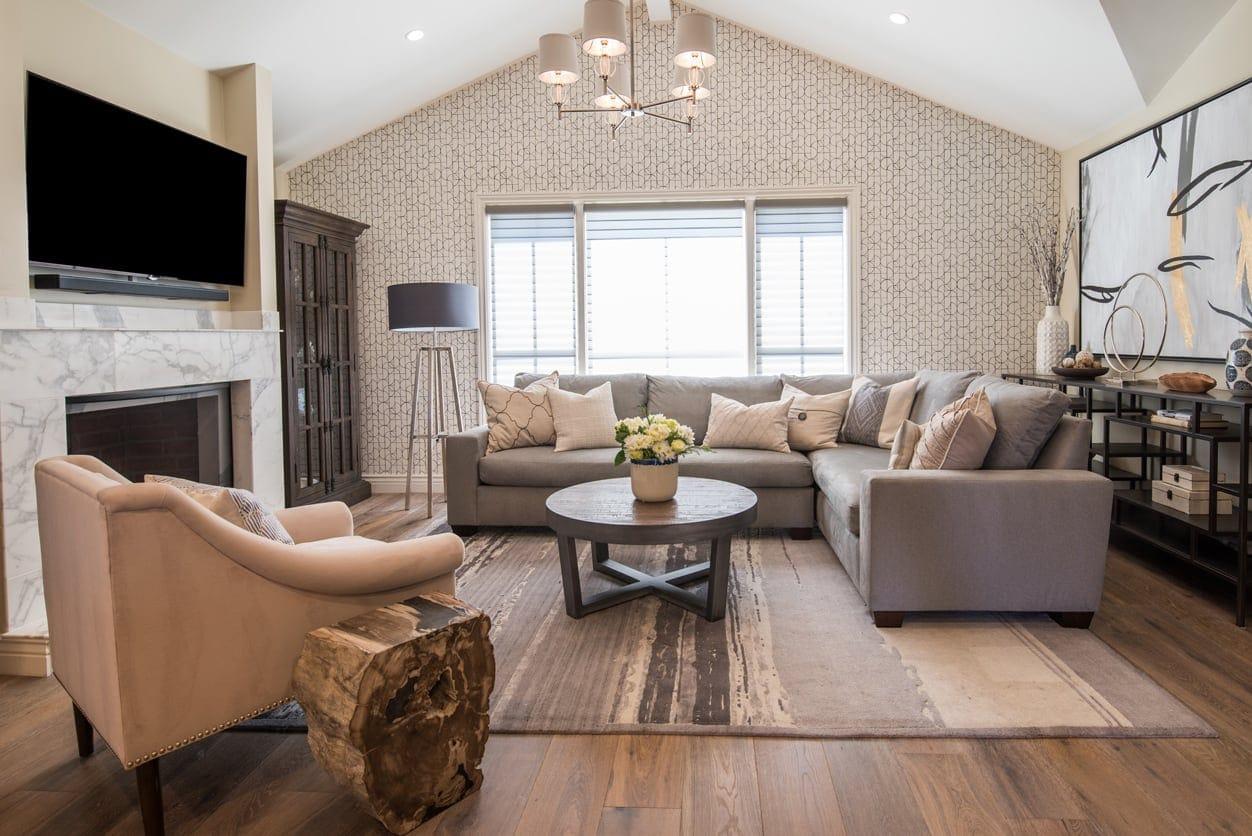
Layering textures is the practice of combining different materials and finishes in one room, smooth against rough, matte against sheen, soft against structured, so the space reads with depth instead of flatness. It is the discipline behind a living room that looks considered rather than furnished in a single afternoon. Most rooms that feel thin aren’t missing color or money. They are missing the half-dozen tactile decisions that give the eye a path to follow and the hand something to notice.
Table of Content |
To layer textures is to combine materials that feel different in one room, a wool rug under a leather sofa, linen drapery beside a stone table, a boucle chair against oiled wood. The point is the contrast you can feel. Run a hand along a linen cushion, then a leather arm, then a cool stone tabletop, and the room has already told you three different things. A layered room does the same for the eye, all at once, before anyone reaches out to touch it. Done well, layering gives a flat room depth without adding a single new color.
Most people reach for color when a room feels off. Texture is the quieter lever, and usually the right one. A living room can be beautifully painted and still feel like a showroom if every surface is smooth, every fabric the same weave, every finish the same sheen. The hand has nothing to notice, so the eye stops looking. Layering is how a designer keeps both engaged, and it is the difference between a room that feels gathered over time and one that was clearly finished in an afternoon.
Once you start looking for texture, the reason a room falls short becomes obvious. A flat living room is almost never a color problem. It is a texture problem. When every surface shares the same finish, light strikes all of it the same way, and the space reads as one note held too long.
Swap a few of those surfaces for materials that catch light differently, a nubby wool, a slubby linen, a hammered metal, and the room gains depth even if the palette never changes. Different textures throw different shadows, and shadow is what gives a room dimension. The effect is strongest in a neutral room, where there is no color doing the work, only the play of matte against sheen and rough against smooth. That is why a fully neutral room by a good designer can feel rich while a colorful one by an amateur feels busy. The neutral room is layered. The colorful one is just loud.
The fear, reasonably, is that more materials means more mess. Layering has a discipline, though, and the discipline is what keeps it from tipping into clutter. The aim is contrast that still feels cohesive, materials that differ in weave or finish while agreeing in tone and scale.
Five principles carry most of it:
The work is not about adding more. It is about choosing a few materials that disagree in feel and agree in spirit.
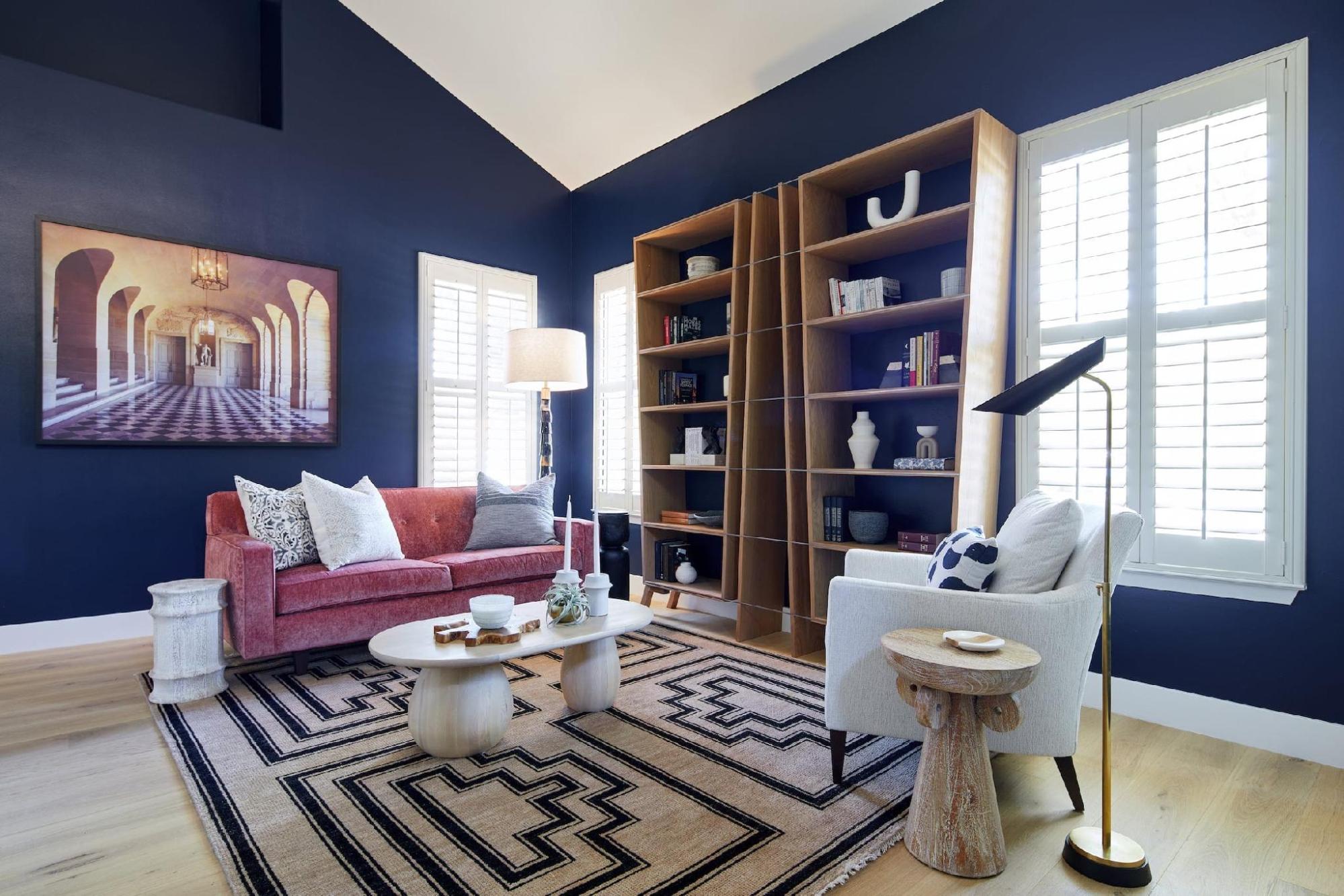
The materials worth layering are the ones that reward being touched. In a luxury living room, those are the textures that improve with age. Natural materials carry this best. Wool and linen soften, leather burnishes, oiled wood deepens, and stone and aged metal hold their character for decades. The richness comes from variety and provenance more than from cost. A wool flat-weave, a honed-stone tabletop, a hand-thrown ceramic, an aged-brass lamp, each is a different material doing a different job, and the room is the sum of those differences.
| Layer | Example | What it adds |
|---|---|---|
| Underfoot | A wool or sisal rug | a soft base the room settles onto |
| Seating | Leather or boucle | structure played against softness |
| Window | Linen drapery | filtered light and a little movement |
| Accent | Hammered brass or stone | sheen against all that matte |
This is the fourth idea behind what the studio calls the Earned Beauty Principle, that a room builds its depth in layers, not in a single pass. Sourcing is how those layers are found. Natural materials gathered from the regions they come from carry a quality a single factory run cannot reproduce, and used sparingly, four or five of them say what twenty matching pieces never could.
A room you finish in a single pass is a room you redo in two years. We build in layers so it deepens instead of dating, and we start with the materials a family will actually touch.
Kanika Bakshi Khurana
There is one more reason texture matters more here than most places. Texture and light are partners, which makes the Bay Area a generous place to layer a room. On the Peninsula, the open plans and walls of glass that the Eichler legacy left behind carry daylight deep into a room all day, and that moving light is what brings layered texture alive. A nubby wool or a slab of marble looks like one thing at breakfast and another by late afternoon, because the shadows shift with the sun.
Kanika Design, an interior design firm based in the San Francisco Bay Area, builds living rooms this way on purpose, layered to deepen over years rather than dated by a single look. A layered room is the opposite of a quick refresh. If your living room feels flat and you suspect it isn’t the color, start a conversation with our studio. The fix usually begins with two or three materials, not a whole new room. You can see the same thinking shape a whole room in the living room that earns its beauty, watch it play out in color in committing to a bold hue, and it is the way an interior designer in Palo Alto ought to work.
Read Also – 20 Living Room Design Ideas for a Cozy Gathering Space
Texture layering is combining materials with different feels and finishes in one space, smooth and rough, matte and glossy, soft and structured, so the room reads with depth. It is a core interior design discipline because varied textures catch light differently and keep both the eye and the hand engaged rather than letting a room go flat.
A flat living room is usually a texture problem, not a color problem. When every surface shares the same finish, light hits it all the same way and the room reads as one note. Swapping a few surfaces for materials that catch light differently adds depth, even when the palette stays exactly the same.
Yes, it can. Aim for two or three distinct finishes rather than a long list. That is enough contrast to hold attention without the materials competing. The textures can differ widely in feel, as long as they share a tone and a sense of scale, which is what keeps variety from turning into clutter.
Start with a large, quiet base such as a flat-weave or sisal rug, then set a smaller patterned or vintage rug on top. The base settles the furniture and the top layer brings pattern and warmth, giving the floor the same built-up depth as the rest of the room.
Soft, natural materials warm a room fastest, wool, linen, leather, boucle, and oiled wood. They absorb light rather than bounce it, which reads as cozy, and they wear in rather than out. Pair them with a little sheen, like brass or stone, so the warmth has something to play against.
RECENT COMMENTS