

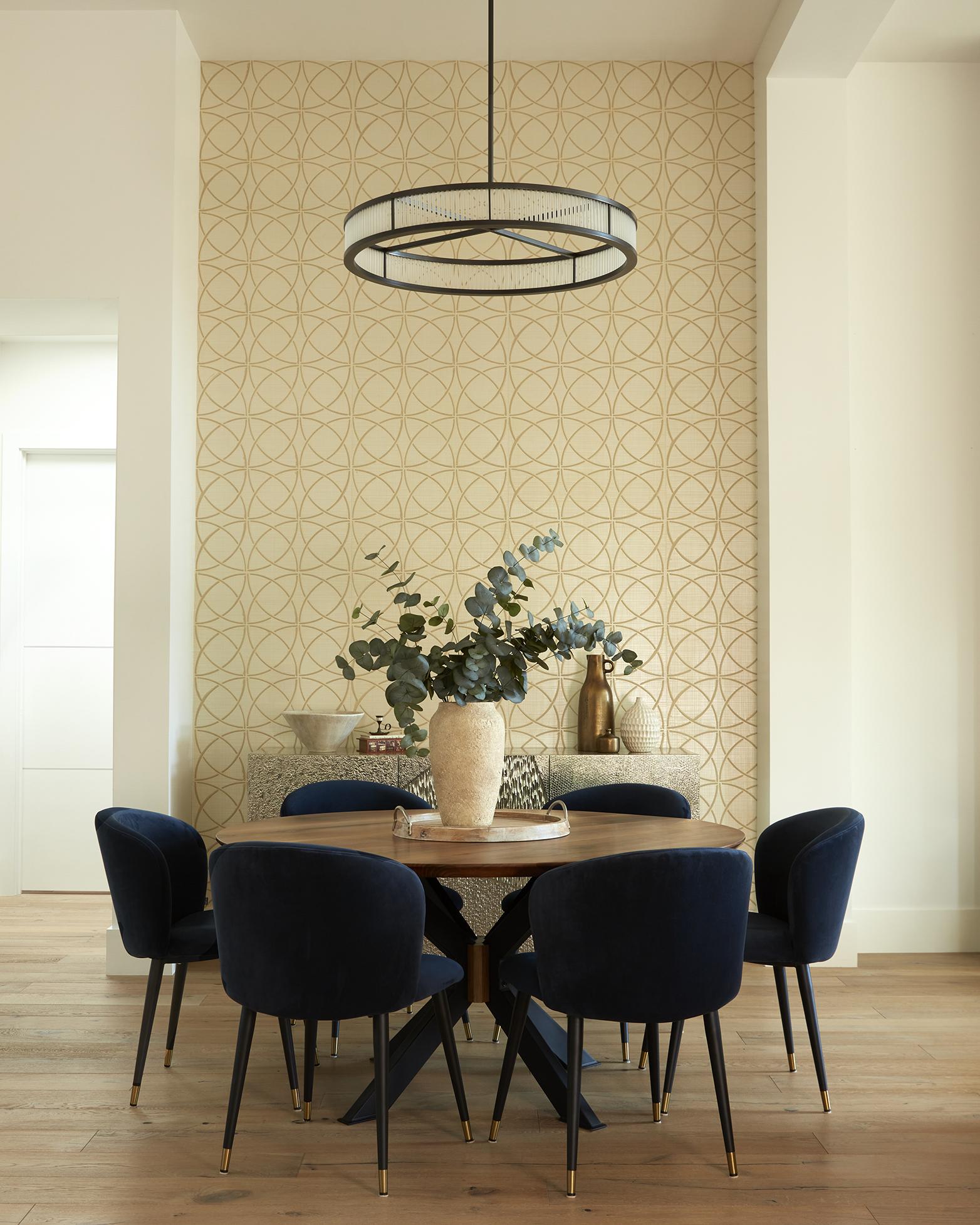
The dining room color ideas worth keeping start by ignoring the swatch wall and starting from how the room is actually used. A dining room is not a space you live in for hours. You come to it on purpose, mostly in the evening, for a meal with a little sense of occasion, and then you leave. That single fact is what makes it the one room in the house that does not just tolerate bold, saturated color but is genuinely improved by it.
Table of Content |
Two things, and no other room has both. It is used in short, evening stretches rather than lived in all day, so a deep, saturated color reads as occasion instead of weight. And a dining table anchors the room, giving it a fixed center of gravity and leaving the walls free to be dramatic without the space tipping into chaos.
Most rooms have to earn their color slowly, because you live in them for hours and a wrong note wears on you over a long afternoon. A dining room never asks that of you. The same depth that would feel heavy in a room you sit in all day works here precisely because you do not.
The boundaries help too. A dining room has clear edges and one real job, to gather people and make an evening feel like more than dinner, and color is the fastest way to give it that sense of event. So the walls do not have to recede. They can close in a little and make the table the whole world for an hour.
None of this is an argument for color everywhere, and it is closer to the opposite. Because most of a home should stay calm and easy to live in, the dining room becomes the place to concentrate the drama you held back in the rooms you actually relax in. It is the one room where restraint is the wrong instinct. The beige that feels safe in a hallway feels like a missed chance over a table set for people you care about.
A handful of saturated colors do this best, and which one is right comes down to the mood you want and the light the room actually gets through an evening.
| Color | The mood it sets | The light it wants |
|---|---|---|
| Forest or emerald green | calm, sophisticated, timeless | holds up in day and evening |
| Deep navy | confident, with quiet drama | sharpest under warm evening light |
| Burgundy or wine | warm, enveloping, theatrical | candlelight and brass |
| Charcoal, undertone watched | grounded and moody | layered lamplight, never one overhead |
Each one behaves a little differently. Green is the easiest to live with and the hardest to get wrong; a forest or emerald reads as confident rather than loud, sits naturally with wood and brass, and keeps its composure in both daylight and candlelight. Navy is the quiet dramatist, almost neutral until the evening light deepens it. Burgundy and wine are the theatrical end of the range, all warmth and enclosure, swinging between heritage and modern depending entirely on what you set beside them. Charcoal is the riskiest, because everything rests on an undertone you cannot fully judge until the paint is up and the lamps are lit.
The detail that decides whether one of these sings or sulks is undertone. A color labeled charcoal can pull distinctly blue, green, or even purple once it is on the wall, and a burgundy can read period-traditional next to dark wood or quietly contemporary next to a dusky pink. Green and blue undertones tend to feel calm and sophisticated, red and purple undertones turn warm and theatrical, and brown and grey undertones stay grounded and earthy. None of that shows on a paint chip held up at noon. Paint a wide swatch, live with it across a full evening, and judge it by the candlelight and lamplight you will actually dine in. The color you choose in daylight is rarely the color you eat dinner in.
It is worth deciding early how far to carry it. A deep color that stops at the walls, with white trim and a white ceiling, often breaks the spell it was meant to cast, because the eye keeps catching on the bright edges. Painting the trim and the ceiling in the same shade turns four colored walls into one enveloping room, which is usually what a dramatic dining room is reaching for in the first place. It is the bigger commitment, and it is almost always the one that pays off.
A saturated dining room can still fall flat, and when it does the reason is almost always the same. Dark walls absorb light, so a single fixture overhead leaves them looking dull and the room feeling like a cave. The fix is to stop relying on one light and start layering. A chandelier or pendant over the table gives the room its center of gravity. Sconces wash the walls so the color glows instead of swallowing the room. Candles and low lamps add the warmth that makes brass, glass, and a polished table come alive. Warm bulbs matter as much as the fixtures, somewhere around 2700 kelvin, so the whole room reads like candlelight rather than a meeting.
Texture is the other half of it. A deep color on flat, hard surfaces reads flat, no matter how good the color is. Velvet on the chairs, a length of linen at the window, a wood table with real grain, a little aged brass, and that same green or navy suddenly has a depth you can feel as much as see. This is where a dramatic room is won or lost. The color sets the mood in an instant. The materials are what keep it from looking like a paint chip blown up to the size of a wall.
The most common regret is not the color itself. It is stopping halfway. A daring shade on the walls, then builder-grade downlights and a bare table, and the whole thing reads as a paint job rather than a designed room. The color is the easy part. The light, the materials, and the nerve to carry it through are the rest of the job, and most people stop at the wall.
Everywhere else in a home, color is a negotiation. The dining room is the one place I tell clients to stop negotiating and commit. You are only ever in it on purpose.
Kanika Bakshi Khurana
If there is a single room to spend your courage on, this is it. The risk is genuinely low, because you are not living inside the color all day, and the reward is high, because a dining room with conviction turns an ordinary weeknight dinner into something people remember being in. The mistake here is not going too dark. It is going beige in the one room that was built for a little drama. We have watched clients hesitate over a dark green for weeks and then, a month after it goes up, wonder why they ever ate dinner in a pale room. The fear is almost always bigger than the regret.
Kanika Design, an interior design firm based in the San Francisco Bay Area, designs dining rooms around how a family actually gathers rather than how a room photographs, which usually means more color, not less. If you have been circling a bold shade for your dining room and quietly talking yourself out of it, start a conversation with our studio. You can see the same argument made for a whole living room in the case of color in a living room, and it is the way interior designers in the San Francisco Bay Area ought to think about a room you only ever enter on purpose.
Read Also – Luxury Living Room Design: Creating a Room That Earns Its Beauty
There is no single best, but the colors that consistently work are saturated and a little dramatic, forest green, deep navy, burgundy, and charcoal. They suit the room’s evening, occasion-driven use, where lighter neutrals can fall flat. The right one depends on your light and the mood you want the room to set.
Yes, more than in almost any other room. Because a dining room is used in short evening stretches, dark walls read as intimate and dramatic rather than closed-in. The key is layered, warm lighting so the color glows instead of going gloomy.
Depth and restraint, not brightness. Deep greens, navy, burgundy, and well-chosen charcoals feel more elegant than primary or pastel shades, because they carry undertone and shift with the light through an evening. Pair them with natural materials and warm metal.
Layer the light and add texture. A dark room lit by one overhead fixture feels like a cave; the same room with a chandelier, wall sconces, candles, and velvet or wood feels rich. Warm bulbs around 2700 kelvin keep the whole thing reading like candlelight.
RECENT COMMENTS