

If the same surfaces keep filling up, the problem may not be a lack of discipline. It may be that your home does not have an easy, logical place for the things you use every day.
You clear the kitchen counter on Saturday. By Thursday, the mail, keys, chargers and school papers are back. Decluttering helped temporarily, but the same clutter returned to the same place.
That pattern is useful information. It may mean you own too much, your routines need to change or the room does not provide the right storage where you naturally need it. Often, the answer is a combination of all three.
Decluttering decides what should stay. Good design helps decide where the remaining items should live.
Table of Content |
Clearing a surface treats what you can see. It does not automatically solve why everything is collected there.
A kitchen counter may become the landing place for mail because there is no drawer near the entry. Shoes may cover the floor because the existing bench holds only two pairs. A bedroom chair may collect clothes because there is no practical place for items that have been worn but are not ready for the laundry.
When clutter repeatedly returns to the same location, ask what that location is doing for the household. Is it close to where the items are used? Is the available storage too small, too far away or difficult to access?
The goal is not to eliminate every visible object. A well-designed home still looks lived in. The goal is to make daily items easy to put away and intentional items pleasant to display.
Before buying organizers or planning built-ins, determine which problem you are trying to solve.
Start with two questions:
If the answer is “every day” and “right here,” the location probably makes sense and the storage may be missing.
If the answer is “twice a year” and “in the garage,” the item may simply need to return to its proper place.
If a closet is full of items no one uses, more cabinetry may only create room for more things. Decluttering should come first. If the remaining items are useful but still have nowhere practical to go, design may be part of the solution.
Clutter tends to return to high-use areas because those are the places where daily routines happen.
| Where clutter collects | What it may signal | A possible response |
|---|---|---|
| Kitchen counter | No landing place for mail, keys or chargers | Entry drawer, concealed charging or nearby cabinetry |
| Dining table | No separate surface for paperwork or household tasks | Small desk, command area or built-in work surface |
| Entry floor | Shoes, bags and coats exceed the storage provided | Bench storage, hooks and closed cabinetry |
| Spare room | No planned place for seasonal or bulky items | Deep storage elsewhere or a better-organized utility area |
| Bedroom chair | No place for clothes between wears | Valet rail, hooks or a dedicated wardrobe section |
| Family room surfaces | Remotes, games and children’s items have no home | Closed storage, drawers or decorative boxes |
These are not automatic diagnoses. A pile of mail may reflect an unfinished habit rather than a missing cabinet. But the location gives you a useful place to begin.
Baskets, bins and boxes are useful when they fit a clear purpose. They are less useful when they become another layer placed over an unresolved storage problem.
Before buying a container, ask what will go inside it, where it will live, how often it will be used and whether it holds the true volume of what needs to be stored.
A decorative box on a coffee table can be an elegant place for remotes, chargers or small everyday objects. It keeps frequently used items within reach while helping the room feel considered.
The difference is intention. One box designed around a daily need is useful. A new collection of baskets every time clutter returns usually means the underlying problem remains.
Useful storage begins with the household, not the cabinet.
At Kanika Design, storage is considered as part of the room’s layout and overall design. We look at four things before recommending built-ins, closets or cabinetry.
What actually needs to live in the room?
This means looking inside cabinets and counting the items that must remain after decluttering. A family room may need space for games, electronics, toys and blankets. A dining area may need storage for serving pieces and linens.
Guessing often produces storage that looks beautiful but does not hold what the client owns.
Where are the items used?
Shoes belong near the entrance used most often. Serving pieces should be close to the dining area. Children’s items should be easy for adults to conceal and, when appropriate, easy for children to reach.
If putting something away requires walking to another end of the house, it is more likely to remain on the nearest surface.
Different belongings require different depths, heights and divisions.
Books, coats, platters, board games and electronics should not all be placed in cabinets designed to one average dimension. Measure what remains before deciding whether the answer is a drawer, shelf, closet or deeper built-in.
Items used daily should be easiest to reach. Seasonal or rarely used items can go higher or deeper.
Accessibility also affects whether storage should be open or closed. Open shelves can make books, art and meaningful objects part of the room. Closed storage is often more practical for paperwork, electronics, toys and visual clutter.
Decluttering does not mean removing every book, object or personal item from view. It means deciding what should be displayed and arranging it with intention.
Instead of leaving books in small piles throughout a room, use a few on a coffee table or side table. A planter or decorative object placed on top can turn the stack into part of the composition.
The same principle applies to trays and boxes. A decorative box can hold remotes. A tray near the entry can contain keys. A small bowl can collect the items that would otherwise scatter across the counter.
The object should earn its place through function, meaning or visual interest. When everything is displayed, nothing receives attention.
Choose the space whose clutter affects you every day, such as the kitchen counter, entry or family room. A visible improvement in a frequently used area builds momentum.
Empty the drawer, cabinet or surface so you can see the true volume.
Donate, recycle or discard items that are broken, expired, duplicated or no longer used.
Closets are often a good place to begin. If clothing has not been worn in the last six months, consider whether it should be donated or passed on. Seasonal and special-occasion pieces may be exceptions, but the question helps reveal how much of the closet serves the life you live now.
Organize around routines, not only categories. Scissors may belong in more than one room. Remotes should live near the seating area. School forms may need a home near the entry or kitchen rather than in a distant office.
Measure depth, height and overall volume before buying containers or designing cabinetry. This reveals whether the existing storage can be reorganized or the room needs a larger change.
The answer may be a habit, a small organizer, a decorative box, a professional organizer or a design change. Not every clutter problem needs custom storage.
If the home already has suitable closets and cabinets but they are overfilled or poorly categorized, a professional organizer may be the best place to begin.
An organizer can help the household make decisions, group belongings and create systems within existing storage. Interior design becomes more relevant when the remaining items do not fit, the storage is in the wrong location or the room’s layout needs to change.
Kanika Design incorporates closets, cabinetry and custom built-ins within broader furnishing and remodeling projects. We generally do not take on standalone decluttering or closet-organization work.
Storage should be considered during design when it affects how the room functions or how spaces connect.
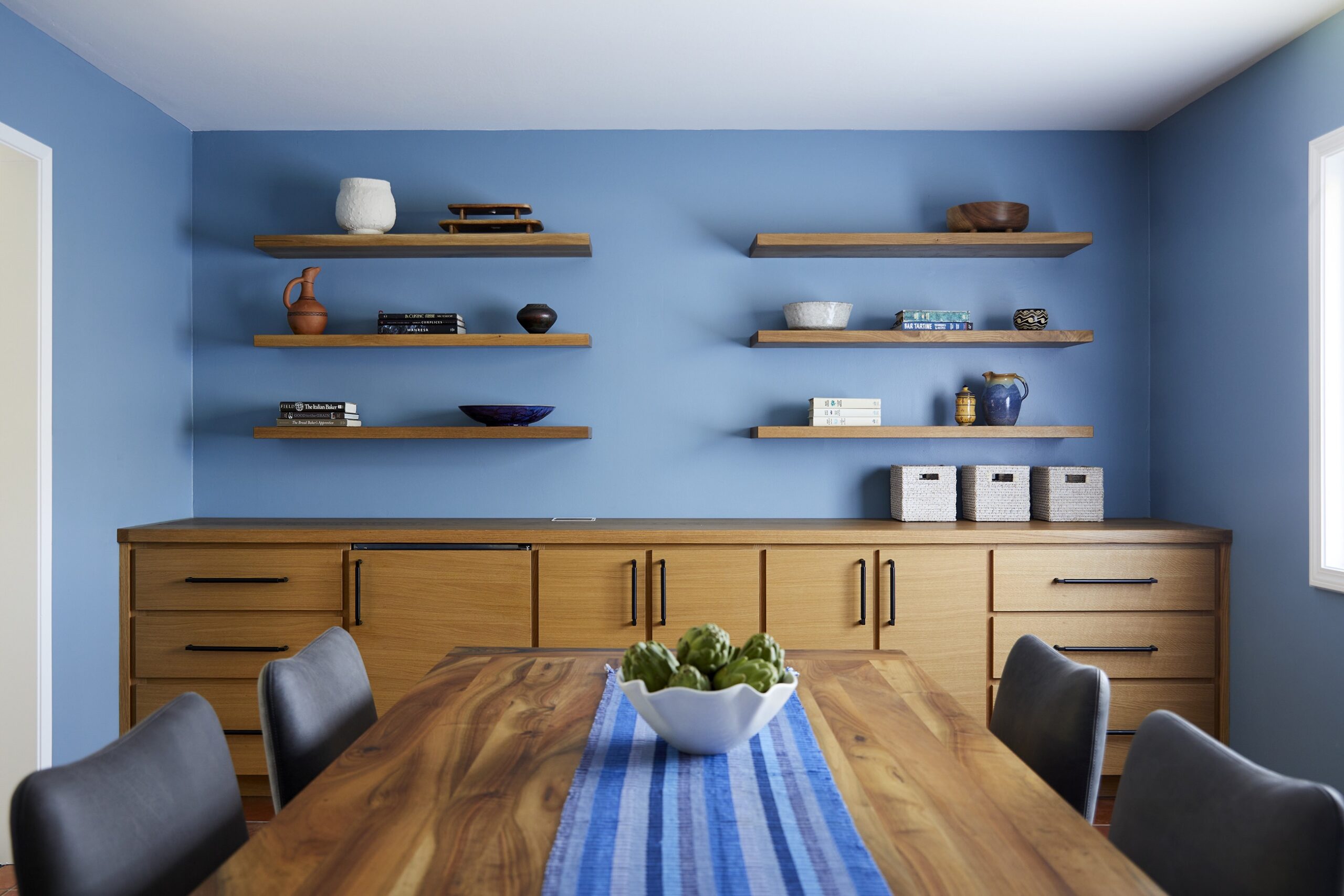
In one whole – home renovation in Los Altos Hills, a custom solid-oak built-in was designed alongside changes to the kitchen and dining areas. Because the storage was considered with the layout, it became part of the architecture rather than an addition made after the room was finished.
Many built-ins and closet systems can be completed without major structural changes, although permitting requirements depend on the project scope and local jurisdiction. Electrical, structural or other building changes may require additional review.
The point is not that every room needs custom joinery. It is that storage works best when it is designed as part of the room rather than treated as an afterthought.
I usually tell clients to begin with their closets. If something has not been used or worn in the last six months, it may be time to donate it or pass it on. Good storage cannot compensate for keeping everything.
Once you know what should remain, give small everyday items a designated place. Decorative boxes are one of my favorite solutions for remotes, keys and chargers because they reduce visual clutter while becoming part of the decor.
Books can also be used creatively. A few on a coffee table or side table, finished with a planter or decorative object, can feel layered and intentional rather than messy.
For homes with children, I recommend more closed storage. Open shelves can look beautiful, but closed cabinetry makes it much easier to put toys, games and everyday items away and allow the room to feel calm again.
Kanika Bakshi Khurana
Decluttering helps decide what should remain. Organization creates routines for putting those items away. Design supports both by making appropriate storage available in the right place.
When the same clutter returns to the same surfaces, pay attention to the pattern. It may reveal a habit that needs to change, belongings that need to leave or a room that no longer supports the way your household lives.
The best solution is not always more storage. It is storage planned around what you use, where you use it and how easily it can be put away.
Start with the high-use area whose clutter affects you most often. The kitchen, entry or family room usually provides a faster and more motivating result than beginning with a garage or storage room.
Declutter first. Then look at what remains. If useful items still have no practical place near where they are used, the issue may be inadequate or poorly located storage.
An interior designer can plan closets, cabinetry, built-ins and room layouts that support everyday routines. A professional organizer is usually better suited to sorting, categorizing and creating systems inside storage that already works.
No. A drawer organizer, decorative box, hooks or freestanding cabinet may solve the problem. Custom built-ins make sense when the available storage does not fit the room, the belongings or the larger design.
Make frequently used items easy to put away, keep storage close to where items are used and avoid filling every available cabinet. A short weekly reset is easier to maintain than repeatedly decluttering the entire home.
RECENT COMMENTS