

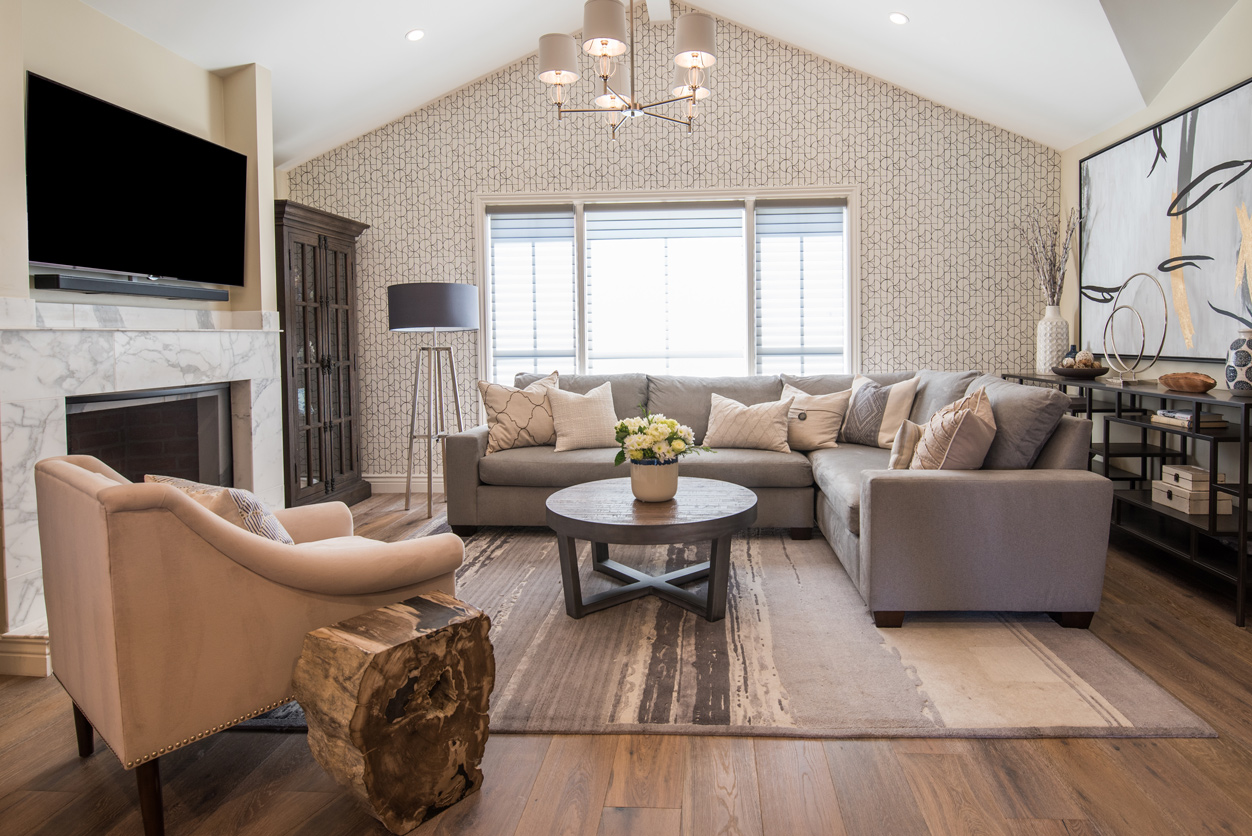
A full home renovation — sometimes called a full gut renovation — is a complete rebuild of a home’s interior: every wall opened, every system replaced or upgraded, the layout reconsidered from scratch. It is not a series of room updates done in sequence. It is a single coordinated project with a defined start and a hard finish line.
Table of Content |
In the Bay Area, the timing of that beginning matters more than most homeowners expect. Summer is not the obvious moment to think about a full home renovation. It is, for reasons specific to this market, the right one.
The Bay Area home remodeling market runs on a cycle most homeowners don’t encounter until they’re already inside it. Spring — roughly February through May — is peak demand. Contractors who do quality work are booked months out. Design firms are running active projects. The San Jose permit queue is processing applications submitted the previous fall.
That pressure eases by June.
Not by half, and not everywhere. But enough to matter. A summer construction start for a full home renovation puts you on the right side of that cycle: into design and permitting while demand is softer, and into active construction when contractor schedules have genuine capacity for a large project.
There is a secondary crunch worth knowing about. Bay Area homeowners who decide in August that they’d like to be finished before the holidays create a late-year rush that tightens trade crew availability and compresses scheduling. Electrical, plumbing, and HVAC subs — the trades that drive a gut renovation’s rough-in phase — are the first to book out. Homeowners who started construction in June don’t compete for those crews. They’re already past rough-in and into finishes.
Starting in summer also means your most disruptive work happens in the driest months of the year. Demolition, structural framing, mechanical rough-in: these are the phases when the home’s interior is open and exposed. A wet-season renovation in the Bay Area puts new framing at moisture risk that a careful contractor will try to manage but can never fully eliminate. Summer removes that variable.
Here is where the calendar logic becomes concrete: a full gut renovation in San Jose or across the Peninsula requires structural permits, and those permits take time. Standard plan review for a major residential remodel in San Jose and Palo Alto currently runs 12 to 20 or more weeks; Los Gatos, Saratoga, and Campbell typically run 8 to 12 weeks.
Work backward from a target summer construction start. A June start requires permit approval by May — which means a complete application into the city by January or February. Which means design development, structural drawings, and material selections with long lead times must be resolved before the new year. The homeowner who first calls a designer in April is not starting construction in June. They’re starting in the fall, at best.
This is not an argument for rushing. It is an argument for starting earlier than feels necessary. In our experience managing full home renovation projects across the Bay Area, the clients who move through the process most smoothly treat February as their decision deadline, not their starting gun.
One faster path is worth naming. San Jose’s Best Prepared Designer program, run through the city’s Building Division, allows firms with a strong permit track record to compress approval time from the standard two to three months down to roughly five days. It does not eliminate the planning work; drawings still have to be complete and correct before submission. But it removes the queue. Working with a design firm that has already established that relationship with the city is a scheduling advantage most homeowners never think to ask about.
Most homeowners come in having priced the construction phase. The phase before it (design, selections, structural drawings, permits) rarely features in the mental budget for time. And the phase after rough-in is the one that gets compressed at exactly the moment everyone is most exhausted.
A full gut renovation timeline in the Bay Area runs nine to fourteen months from design kick-off to move-back, with a further two to four months for design and permitting before construction begins. Here is where that time actually goes:
| Phase | What happens | Typical duration |
|---|---|---|
| Phase 1: Design, selections, permits | Scope definition, design development, material selections, structural drawings, permit submission and approval | 3–5 months |
| Phase 2: Demolition through rough-in | Demolition, structural framing, plumbing, electrical, HVAC | 2–4 months |
| Phase 3: Finishes and close-out | Tile, cabinetry, millwork, paint, fixtures, final inspections | 3–5 months |
| Total | 9–14 months from design start to move-back |
None of those phases is optional. None of them compresses without a cost somewhere else.
This phase determines everything downstream. By the time a general contractor starts work, the layout is set, structural drawings are approved, and materials with the longest lead times are on order. Nothing is visible yet — no dumpster in the driveway, no crew on site. But the clock on your project is already running.
Material selection is where most homeowners lose time. Custom cabinetry runs 10–14 weeks from order to delivery; Italian tile and made-to-order millwork can exceed that. Miss the Phase 1 order window and you’re waiting on a shipment while a finished kitchen sits empty and a crew idles.
Scope locks here, too. Layout changes, structural work, plumbing moves: these appear on the permit drawings and cannot be added mid-construction without a change order and a timeline extension. Clients who decide in Phase 2 that they want a wall removed — one they signed off on in Phase 1 — are not just adding a line to the budget. They are moving every subsequent decision with it.
A complete interior remodel doesn’t fail in construction. It fails here, when Phase 1 scope is treated as a conversation starter rather than a commitment.
Walls come down, systems come out, and the home’s bones become visible; for many older Bay Area homes, it is the first honest look at what was actually built. What is found at this stage — knob-and-tube wiring, old steel plumbing, or asbestos in homes built in the 1950s through the 1970s — determines what Phase 2 becomes.
In our Los Altos Hills home remodel, this phase was shaped by a single Phase 1 decision: removing the walls between the kitchen and all adjoining rooms. That choice drove the structural sequence — which walls needed headers, where the framing would redistribute. It determined where the garden-facing window could go, how natural light would reach the dining area, and where the plumbing had to land. Every trade in Phase 2 worked from that single commitment. Nothing was improvised.
This is why structural scope must be finalized before demolition begins. A wall removed per the permit drawings is a planned event with engineered support. One removed because it seemed right during demolition is a stop-work order and an emergency call to a structural engineer.
Bay Area summers matter here for a specific reason. During rough-in, a home’s framing is exposed — sometimes for several weeks while inspections are scheduled and trades move through. Dry-season construction removes the moisture risk that wet-season demolition introduces in new framing. That risk doesn’t disappear when the walls close.
Tile, cabinetry, millwork, paint, fixtures. From the outside, this phase looks like the home is nearly finished. It is also the one that most consistently runs long.
But “nearly finished” in a whole-house renovation is not a single moment. It is a sequence with a fixed order. The tile floor sets and cures before cabinets go in. Cabinets are installed before countertops are templated. Countertops land before plumbing fixtures finish. Pull any one of those forward or back and the trades behind it idle.
Custom millwork introduces the most variation. A solid oak built-in, the kind that turns a dining area from a pass-through into an anchor of the room, cannot be rushed at the fabrication stage without a visible result. We order it in Phase 1 (before anyone picks up a hammer) so it arrives on schedule.
The honest answer to “how much longer will Phase 3 take than we planned?” is: some weeks. Usually not dramatic, occasionally frustrating. A full home renovation that finishes later than originally hoped is not a failed project; it is one where the finish phase absorbed the surprises that the earlier phases did not. Building a realistic buffer into the move-back date is the only mitigation that actually works.
The number most homeowners start with — gathered from a neighbor’s project, a contractor’s website, a national remodeling guide — is usually wrong for the Bay Area, and almost always wrong for a whole-house renovation specifically. Not because those sources are dishonest. Because full gut renovation cost is not a single number. It is an output of four variables: scope, the condition of existing systems, finish tier, and project management structure.
Bay Area gut renovations with structural modifications currently run $350 to $500+ per square foot — translating to $700,000 to $1,000,000+ for a 2,000 sq ft home. Those ranges are real. They are also almost meaningless without scope definition behind them.
The table below is where the cost conversation actually starts:
| Scope tier | What it involves | Bay Area cost / sq ft (2026) | 2,000 sq ft estimate |
|---|---|---|---|
| Cosmetic refresh | New surfaces, fixtures, finishes; no layout changes; existing systems retained | $75–$150 | $150K–$300K |
| Mid-range remodel | Layout changes, partial systems upgrade, higher-spec materials | $200–$350 | $400K–$700K |
| Full gut renovation | Structural changes, all systems replaced, full layout redesign | $350–$500+ | $700K–$1M+ |
| Premium gut (Palo Alto / Saratoga / Atherton) | Above + luxury finishes, custom architectural work | $500–$600+ | $1M–$1.2M+ |
Premium communities like Atherton, Woodside, Saratoga, and Palo Alto trend 15–25% higher than the South Bay baseline. This premium is not an inflated contractor margin. It reflects finish expectations, the specialized contractor pool those markets attract, and more rigorous local plan review.
Kitchen and bathrooms alone typically represent 35–50% of total project cost at this scope. These are the rooms with the highest trade density — plumbing, electrical, mechanical, cabinetry, tile — and the longest material lead times.
Permits are a line item most homeowners underestimate. Santa Clara County permit costs for a major whole-home remodel typically run $15,000–$40,000 — not the $1,000–$2,500 a bathroom permit might generate, but a real project cost in its own right.
The honest caveat: some of what you’re paying for cannot be known until the walls are open. Older Bay Area homes routinely surface hidden hazards at demolition — failed wiring, old steel plumbing, asbestos — adding $20,000–$80,000 in scope before a single finish decision has been made. A contractor who prices a Bay Area renovation without a buffer line is either naive or hoping you won’t notice when the change orders arrive.
Budget a 15–20% buffer, especially in older homes. This is not pessimism. It is the difference between a reserve you don’t use and a project that stalls mid-build.
There is a specific set of decisions that must be resolved before a full gut renovation enters the permit phase — not because a designer says so, but because permit drawings require them. These are not style preferences. They are structural and systems commitments that appear on the drawings the city reviews. Change them after submission and you’re pulling a revised permit. Change them after construction begins and you’re paying for rework.
Homeowners are often surprised by how early these decisions arrive. The kitchen cabinet style can wait. The wall between the kitchen and the living room cannot.
Decisions that must be made before permit submission:
Any wall removal, room addition, or footprint change must be on the permit drawings. If you’re considering opening a kitchen to an adjoining dining space — as we did in the Los Altos Hills project, removing walls on all sides to bring in natural light and create a single open living area — that decision shapes the structural drawings, the framing sequence, and every trade that follows. It is not a Phase 2 conversation.
Moving a sink, a toilet, an island with a wet bar: all require permit drawings showing new drain and supply routing. Deciding mid-demolition that the island should sit two feet to the left adds days, a change order, and a plumbing inspection delay.
Bay Area gut renovations often require a panel upgrade to meet current California code. Heating and cooling decisions — ducted versus ductless, whether to add a heat pump — must be locked in before the permit is filed. California’s Title 24 energy code applies to all projects filed after January 1, 2026; in practice, this means upgraded ventilation and heat pump systems, adding $3,500 to $7,000 to the budget. It is not optional.
A new window opening — even a single one — requires a structural header in the permit drawings and cannot be added after submission without reopening the permit.
Homeowners who conflate the two categories under “we’ll figure it out as we go” don’t slow down Phase 3. They slow down Phase 1 — which delays permit submission, which delays construction start, which collapses the summer window entirely. Late structural decisions also arrive under pressure: a client staring at an open subfloor with a crew waiting for direction. Those are the decisions that generate the most regret.
Getting to permit submission with scope locked is the unglamorous part of this process. It is also the part where the project is won or lost.
Here is the version of this argument you will hear from almost every design firm: hiring a designer saves money because it prevents costly mistakes. That is true enough to be worth saying and too vague to be useful. Let us be more specific about what actually happens on a complete interior remodel when there is no designer in the room.
What typically fails is not the aesthetic. It is an oversight. Structural decisions get made by the GC without a full picture of the finish sequence. Long-lead materials are not ordered until someone notices they’re needed. The kitchen tile is selected after the cabinet order is placed, and the two don’t quite work together. The dining area and the kitchen read as separate projects — because they were managed as separate conversations. No one was accountable for the whole.
That accountability is what an interior designer brings to a full home renovation. Not taste. Coherence.
In our Los Altos Hills home remodel, the defining concept was open space and natural light — a principle that had to be present in every decision from the permit drawings through the final hardware selection, or it would dissolve into a series of nice rooms that didn’t add up to anything.
Removing the walls between the kitchen and all adjoining rooms was the structural commitment that made the concept possible. But the concept is what justified the commitment. The garden-facing window was designed into the framing sequence, not added later when someone noticed the wall was gone. The checkerboard floor tiles and wooden elements were chosen to anchor the open space without breaking it into zones. The black, white, and gold Italian-made backsplash — made-to-order, with the lead time that implies — was specified in Phase 1 so it arrived on schedule; it became the focal point of the kitchen precisely because it was the one material that didn’t defer to the neutral palette around it.
The Terracotta floors in the dining area are a detail worth pausing on. They were salvaged from the old kitchen during demolition and relaid. That decision required knowing, before demolition began, that the material was worth keeping, where it would go, and how it would read against the new custom solid oak built-in going in beside it. It is the kind of decision that is only available if someone is thinking about the whole home at once. Salvage opportunities don’t announce themselves during construction; they appear briefly, in the gap between demolition and framing, and close.
Kanika’s background in psychology is not a credential we reach for in bios and forget. It is the working logic behind how we read a client and a space before we specify anything. The open-plan decision in Los Altos Hills was not a trend response. It was a reading of how the family actually used the house — and what the existing layout was costing them in daily friction, in connection between kitchen and dining, in light denied to rooms that could have had it.
People rarely articulate what they need from a room. They describe symptoms: the kitchen feels closed off, the dining area feels like an afterthought, the house doesn’t feel like ours. The design work is partly translation — from symptom to spatial decision — and partly conviction, holding that decision steady through fourteen months of a major home renovation when fatigue and cost pressure make every commitment feel negotiable.
Your home should reflect how you actually live, not how a floor plan suggests you might. That requires someone who can hold that distinction under pressure for the full duration of a project.
Kanika Design has managed full home renovations across San Jose, Los Altos Hills, Saratoga, Palo Alto, and the broader Bay Area since 2008. Named Best Interior Designer in the San Francisco Bay Area, we work as a single point of accountability — design and construction management under one roof. For a full gut renovation, where the decisions interlock and the timeline punishes gaps in oversight, that structure is not a service offering. It is the mechanism by which the project holds together.
Read Also – Renovation vs. Remodel vs. Restoration: Understanding the Key Differences
If you’re considering a full home renovation in the Bay Area and the timeline above feels closer than comfortable, that’s the right instinct. The homeowners who move through this process with the least friction are the ones who started the design conversation earlier than felt necessary.
We work with clients across San Jose, Los Altos Hills, Saratoga, Palo Alto, and the surrounding Peninsula — managing the full project from concept through construction sign-off, so the decisions that need to happen in February actually happen in February. If you’d like to talk through what a full gut renovation would involve for your home, we’d be glad to start that conversation.
What is a full gut renovation and how is it different from a regular remodel?
A full gut renovation strips a home back to its structural framing and rebuilds the interior from scratch — every wall opened, all plumbing and electrical replaced, the layout redesigned rather than worked around. A regular remodel updates specific rooms or finishes within an existing layout; a whole-home rebuild treats the entire home as a single coordinated project with no inherited constraints from the previous floor plan.
How long does a full gut renovation take from start to finish?
A full gut renovation in the Bay Area takes nine to fourteen months from design kick-off to move-back, with a further two to four months for design and permitting before construction begins. The most underestimated phase is the first one: structural decisions, material selections with long lead times, and permit approval all happen before a single wall comes down. Homeowners who plan for construction time only consistently find themselves behind schedule before the project starts.
What does a full gut renovation cost in the Bay Area?
Bay Area gut renovations with structural work currently run $350 to $500+ per square foot — roughly $700,000 to $1,000,000+ for a 2,000 sq ft home, depending on scope and finish tier. Premium cities like Palo Alto, Saratoga, and Atherton run 15–25% above the South Bay baseline. The most reliable way to narrow that range is to define scope precisely before soliciting bids; the widest cost variation in Bay Area home remodeling comes from comparing bids that are not scoping the same project.
Why is summer the best time to start a full home renovation?
Summer is the right time to start because the Bay Area construction market, permit queue, and dry-season conditions all align in a way they don’t at any other point in the year. Contractor capacity opens after the spring peak; dry weather protects exposed framing during demolition and rough-in; and a summer construction start — which requires a February design commitment — positions the project to finish before the following year’s holiday season. A summer home renovation isn’t about convenience. It’s about sequencing the calendar in your favor rather than against it.
Do I need an interior designer for a full gut renovation in San Jose?
You don’t legally need one — but on a full gut renovation, the risk you’re managing without one is oversight failure, not aesthetic failure. San Jose home renovation projects at this scope involve structural permits, multi-trade scheduling, long-lead material sourcing, and decisions that depend on each other across the whole project timeline; a gap in oversight at any point creates downstream cost and delay. An interior designer working across design and construction management — the structure Kanika Design operates under — means one person is accountable for every decision, not just the finished rooms.
RECENT COMMENTS